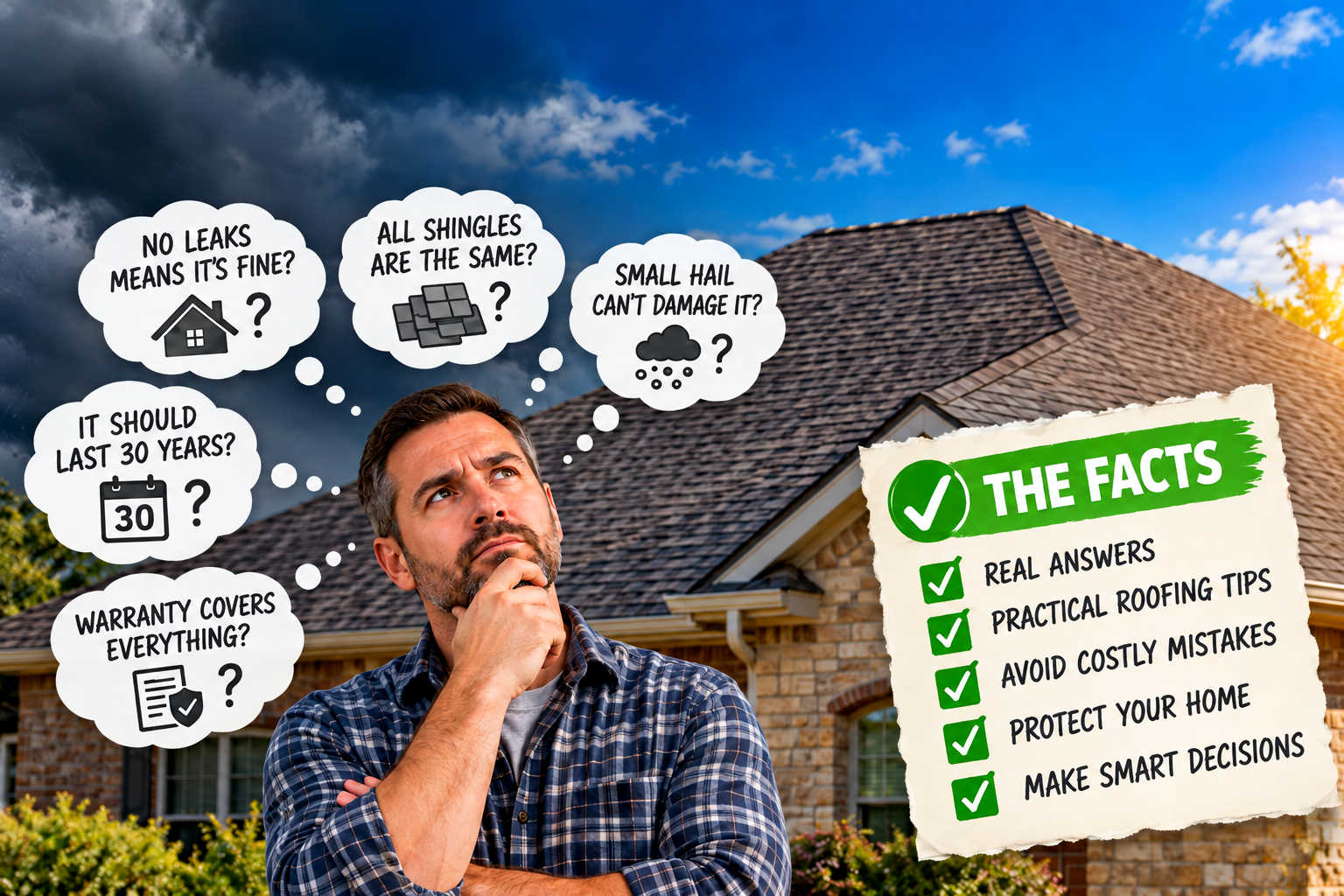
Your roof is one of the most important parts of your home, yet it’s also one of the most misunderstood. From how long shingles should last to whether a small leak means you need a new roof, there’s plenty of roofing advice floating around that isn’t entirely accurate.
Unfortunately, believing the wrong information can lead to expensive mistakes, overlooked damage, and unnecessary repairs.
Understanding the roofing facts behind common misconceptions can help you make smarter decisions about protecting your home. That’s especially important in Amarillo and the Texas Panhandle, where hail, high winds, intense sunlight, and temperature changes can take a toll on roofing materials.
We’re setting the record straight on 10 common roofing myths, explaining why they’re misleading, and sharing practical roofing tips every homeowner should know.
What Are the Most Common Roofing Myths?
Some of the most common roofing myths are that a roof is fine if it isn’t leaking, every roof lasts 30 years, all shingles provide equal protection, and warranties cover every kind of damage. The truth is that roof performance depends on several factors, including materials, installation quality, maintenance, weather exposure, and the roof’s overall condition.
Let’s look at what homeowners often get wrong.
Myth #1: If Your Roof Isn’t Leaking, There’s Nothing Wrong With It
Roofing Fact: A roof can have damage long before water enters your home.
Many homeowners assume their roof is in good condition as long as they don’t see water stains on the ceiling. Unfortunately, a leak isn’t always the first sign of trouble.
Shingles can become loose, flashing can deteriorate, and protective granules can wear away without causing an immediate indoor leak. In some cases, moisture may enter roofing components before it becomes noticeable inside the house.
This is particularly important after severe weather. Hail and strong winds can affect roofing materials even when everything appears normal from the ground.
By the time water stains appear, the problem may have been developing for weeks or months.
What homeowners should know: Don’t wait for a leak to investigate potential damage. If your home has experienced significant hail or wind, consider having the roof professionally inspected.
For more warning signs, read our guide to common signs of roof damage.
Myth #2: Every Roof Should Last at Least 30 Years
Roofing Fact: Roof lifespan depends on materials, installation, weather conditions, and maintenance.
One of the biggest misconceptions about residential roofing is that shingles always last as long as their advertised lifespan.
For example, some asphalt shingle products are designed to provide decades of service under suitable conditions. However, their actual performance can vary significantly.
A roof exposed to repeated hailstorms, strong winds, poor ventilation, or installation problems may deteriorate sooner than expected.
Several factors influence roof lifespan:
- The type and quality of roofing materials
- Installation methods and workmanship
- Attic ventilation and moisture conditions
- Exposure to hail, wind, and extreme heat
- Maintenance history and previous repairs
Even two houses built in the same neighborhood during the same year can experience different roofing conditions.
In Amarillo, frequent wind exposure and severe thunderstorms make it especially important to evaluate a roof’s physical condition rather than relying on age alone.
What homeowners should know: A manufacturer’s warranty period isn’t a guaranteed roof lifespan. Regular evaluations can help determine whether your roofing system is still performing as intended.
Myth #3: All Asphalt Shingles Are Basically the Same
Roofing Fact: Different shingles provide different levels of durability, wind resistance, and impact protection.
It’s easy to assume that shingles are interchangeable because many look similar from the street.
However, there’s a significant difference between traditional three-tab shingles, architectural shingles, and specialty impact-resistant products.
Three-tab shingles typically have a flatter appearance and simpler construction. Architectural shingles use a laminated design that can provide additional thickness and different performance characteristics.
Impact-resistant shingles are engineered and tested to withstand certain impact conditions, making them worth considering in areas where hail is a frequent concern.
However, impact-resistant doesn’t mean hailproof. Severe storms can still damage these products.
When comparing roofing materials, homeowners should consider:
- Wind-resistance ratings
- Impact-resistance classifications
- Material construction
- Warranty limitations
- Installation requirements
- Suitability for local weather conditions
What homeowners should know: Don’t choose shingles based on price or appearance alone. Ask your roofing contractor about the performance ratings and warranty terms of the specific products being recommended.
Myth #4: A Small Roof Leak Means You Need a Completely New Roof
Roofing Fact: Some leaks can be corrected with localized roof repairs.
Discovering water inside your home can make you fear the worst. But a small leak doesn’t automatically mean the entire roofing system needs replacement.
Some leaks originate from isolated problems, including damaged flashing, missing shingles, deteriorated seals, or localized storm damage.
If the surrounding roofing materials remain in good condition, a targeted repair may resolve the issue.
However, repeated leaks, widespread shingle deterioration, extensive moisture damage, or an aging roofing system may make replacement the more practical long-term solution.
The key is identifying the source and extent of the damage.
Water can travel along decking and other roofing components before becoming visible inside your home. That means the location of a ceiling stain doesn’t always indicate where the leak began.
What homeowners should know: Have the cause of a leak professionally evaluated before assuming you need a new roof. A proper assessment can help determine whether repairs or replacement make more sense.
Myth #5: A New Roof Doesn’t Need Maintenance
Roofing Fact: Even newly installed roofs benefit from preventive maintenance and periodic inspections.
A new roof may provide years of dependable protection, but that doesn’t mean you can forget about it completely.
Over time, debris can accumulate, gutters can clog, sealants can deteriorate, and severe weather can damage roofing materials.
Some common roof problems begin with relatively minor conditions that go unnoticed.
For example, clogged gutters may interfere with drainage, while damaged flashing around a roof penetration can create an opening for moisture.
Preventive maintenance helps identify these concerns before they develop into more expensive repairs.
Homeowners should pay attention to visible roofing changes, keep gutters and drainage systems functioning, and consider professional inspections following significant storms.
What homeowners should know: Regular maintenance doesn’t guarantee that your roof will never develop problems, but it can help protect your investment and identify issues earlier.
For a more detailed breakdown, check out our roof maintenance checklist for Texas Panhandle homeowners.
Not Sure If Your Roof Is in Good Shape?
Don’t wait for a leak to find out something is wrong. If your roof has been through a recent hailstorm or you’re concerned about its condition, Tascosa Roofing can help you identify potential problems and understand your options.
Myth #6: A Roof Warranty Covers Anything That Goes Wrong
Roofing Fact: Roof warranties have specific terms, coverage limits, and exclusions.
A roof warranty can provide valuable protection, but it isn’t an insurance policy against every possible roofing problem.
Homeowners sometimes assume that a 30-year or lifetime warranty means any roofing damage will be repaired or replaced at no cost throughout that period.
That’s not how most warranties work.
A manufacturer’s limited warranty commonly covers qualifying defects in roofing materials. Depending on the agreement, it may not cover damage caused by improper installation, severe weather, inadequate maintenance, or other excluded conditions.
A separate workmanship warranty may cover certain installation errors. Enhanced manufacturer warranties can provide additional coverage when specific products and installation requirements are met.
Before purchasing a roofing system, homeowners should ask:
- What exactly does the roof warranty cover?
- Does it include installation workmanship?
- Are hail and wind damage excluded?
- Does the coverage change over time?
- Are inspections or maintenance required?
- Does the warranty need to be registered?
- Can the warranty transfer to a future homeowner?
The answers depend on the specific products and warranty agreement.
What homeowners should know: Read the warranty documentation before signing a roofing contract. Understanding its limitations can help prevent expensive surprises later.
For additional guidance, see GAF’s explanation of roofing warranty coverage.
Myth #7: Small Hailstones Can’t Damage Your Roof
Roofing Fact: Hail damage depends on impact conditions and the roofing material’s condition, not just hailstone size.
Living in the Texas Panhandle means being familiar with severe thunderstorms and hail.
But one persistent myth is that only large hailstones can cause roofing damage.
While larger hail generally carries greater damage potential, smaller hailstones can sometimes affect vulnerable roofing materials, depending on wind conditions, impact angle, shingle age, and existing wear.
Hail impacts may contribute to granule loss, cracks, or other damage. However, not every impact creates functional damage, and the extent of damage cannot be determined by hail size alone.
Two neighboring homes may experience the same storm but have very different results because of differences in materials, roof age, and installation.
What homeowners should know: Don’t assume your roof escaped damage simply because the hailstones appeared small. If a severe storm moves through your neighborhood, consider having a qualified roofing professional evaluate any suspected damage.
Myth #8: Roof Age Is the Best Way to Determine When Replacement Is Necessary
Roofing Fact: The roof’s actual condition is more important than its age alone.
Although roof age is useful information, it doesn’t tell the entire story.
A well-installed roof that’s received proper care may remain serviceable longer than another roof of the same age that has experienced repeated storms or installation problems.
Likewise, a relatively new roof can develop serious issues if its materials were improperly installed or damaged by severe weather.
When evaluating whether replacement is necessary, a roofing professional should consider the complete system.
This includes shingle condition, flashing, decking where accessible, ventilation, previous repairs, and evidence of moisture intrusion or storm damage.
Homeowners should also consider whether repeated repairs are becoming more expensive than a long-term replacement solution.
What homeowners should know: Don’t replace a roof simply because it reaches a particular birthday. Have its condition evaluated and make the decision based on the evidence.
Myth #9: The Cheapest Roofing Estimate Is Always the Best Deal
Roofing Fact: The lowest upfront price doesn’t always deliver the best long-term value.
Everyone wants to save money on home improvements, especially when facing an unexpected roofing expense.
However, comparing roofing estimates based on price alone can lead to costly mistakes.
Two estimates may look similar at first glance but include different materials, installation procedures, warranties, and project requirements.
For example, one estimate might include replacing necessary flashing components and removing existing shingles, while another may use a different installation approach or exclude certain work.
When reviewing roofing estimates, compare:
- Roofing materials and manufacturer specifications
- Scope of removal and installation work
- Flashing and underlayment provisions
- How damaged decking will be handled
- Ventilation requirements
- Labor and workmanship coverage
- Cleanup and disposal responsibilities
- Contractor qualifications and insurance
An inexpensive estimate isn’t necessarily a bad one. The important thing is understanding exactly what you’re paying for.
What homeowners should know: Request detailed written estimates and compare the scope of work before selecting a roofing contractor.
Myth #10: Every Storm-Damaged Roof Must Be Replaced
Roofing Fact: Some storm damage can be repaired without replacing the entire roof.
After a major hailstorm or wind event, homeowners may assume that any damage means they need a completely new roof.
In reality, storm damage varies considerably.
A roof may experience a few displaced shingles, localized impact damage, or more widespread deterioration that affects the roofing system’s ability to protect the home.
Whether repair or replacement is appropriate depends on the extent of damage, the roof’s condition, material availability, and whether repairs can reliably restore its performance.
Insurance coverage is another factor homeowners often misunderstand.
A homeowners insurance policy may cover certain sudden storm-related losses, but coverage depends on the policy terms, cause of damage, deductibles, and claim determination.
Not every damaged roof qualifies for a full replacement under an insurance claim.
What homeowners should know: Document suspected damage from a safe location and arrange an inspection before making major roofing decisions. If insurance is involved, review your policy and follow the insurer’s claim process.
Roofing Myths vs. Roofing Facts: A Quick Comparison
| Roofing Myth | The Reality |
| No leaks means your roof is fine | Hidden damage may exist before leaks develop |
| Every roof lasts 30 years | Roof lifespan varies with materials and conditions |
| All shingles provide equal protection | Shingle performance ratings and construction differ |
| A small leak requires a new roof | Localized repairs may be sufficient |
| New roofs don’t need maintenance | Periodic maintenance remains important |
| Warranties cover all roofing damage | Coverage depends on warranty terms |
| Small hail can’t damage shingles | Damage depends on multiple impact conditions |
| Age determines when a roof needs replacement | Overall roof condition matters more |
| The cheapest estimate is the best | Materials, workmanship, and scope affect value |
| Storm damage always requires replacement | Repairs may be appropriate for localized damage |
Why These Roofing Facts Matter for Texas Panhandle Homeowners
Roofing misconceptions can affect homeowners anywhere, but understanding the facts is particularly valuable in Amarillo and the surrounding Texas Panhandle.
High winds, seasonal hailstorms, strong sunlight, and temperature fluctuations create challenging conditions for residential roofing systems.
These weather patterns can contribute to material wear and expose existing weaknesses that might otherwise go unnoticed.
Knowing how your roofing system works can help you recognize potential problems, evaluate repair recommendations, and make more informed decisions about maintenance or replacement.
The most useful roofing advice isn’t based on rumors, assumptions, or one-size-fits-all recommendations. It’s based on the materials installed, the roof’s condition, and the environmental conditions it faces.
Frequently Asked Questions About Roofing Facts
Can a roof be damaged without showing signs of a leak?
Yes. Roofing materials can experience shingle damage, flashing deterioration, or other problems before water becomes visible inside the home. Professional inspections can help identify damage that isn’t obvious from the ground.
Does a 30-year shingle warranty mean my roof will last 30 years?
No. Warranty length doesn’t guarantee actual roof lifespan. Weather exposure, installation quality, ventilation, maintenance, and product condition can all affect how long a roofing system performs.
Are impact-resistant shingles completely hailproof?
No. Impact-resistant shingles are designed and tested to withstand certain impact conditions, but severe hailstorms can still cause damage. Homeowners should review product ratings and warranty terms.
Does homeowners insurance always cover roof replacement?
No. Coverage depends on the insurance policy, cause of damage, applicable exclusions, deductible, and claim determination. Normal aging and wear are generally treated differently from covered storm damage.
Should I repair or replace my roof?
The answer depends on the roof’s age, overall condition, and the extent of the damage. Localized problems
Get the Roofing Facts Before Making Your Next Roofing Decision
Don’t let common roofing myths lead to unnecessary expenses or overlooked damage. Whether you’re concerned about storm damage, wondering how much life your roof has left, or deciding between repairs and replacement, Tascosa Roofing can help.
Serving Amarillo and the surrounding Texas Panhandle, we provide professional roof inspections, repairs, replacements, and storm damage roofing services.
Get answers about your roof from a local roofing contractor. Call 806-454-9277 or Schedule a Roof Inspection today.