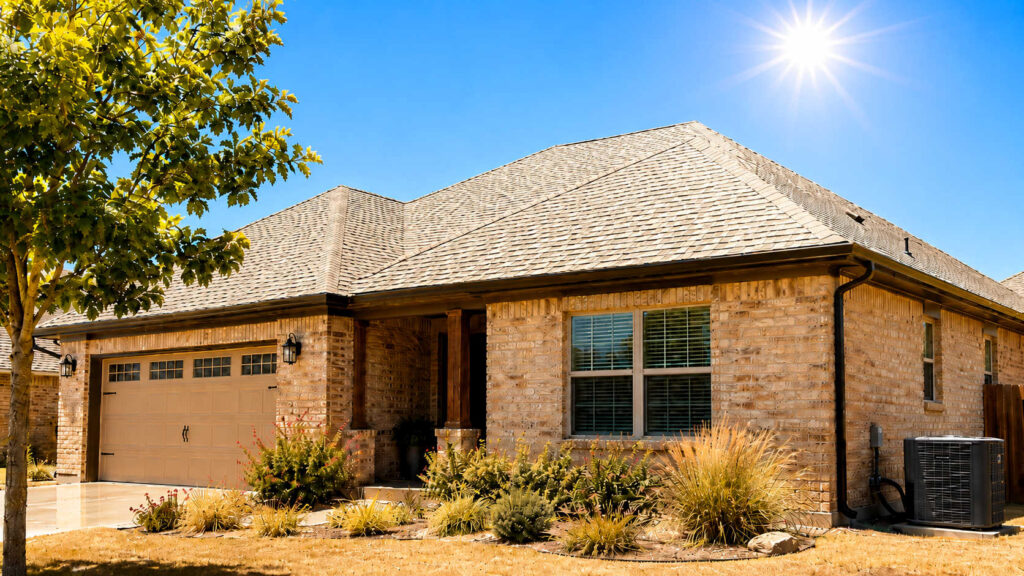
Summer in Amarillo brings intense sunlight, high afternoon temperatures, and sustained demand on residential air-conditioning systems. When electricity costs begin to rise, homeowners often assume the HVAC system is solely responsible. However, the roof above the home can also influence how much heat enters the attic and how hard the air conditioner must work to maintain a comfortable indoor temperature. That is precisely why energy efficient roofs can lower summer energy bills.
Roofing materials, shingle color, solar reflectance, attic insulation, ventilation, and the roof’s overall condition all affect how heat moves through the upper portion of a house. An aging or poorly performing roofing system may allow excessive heat to build inside the attic. That heat can then move toward the living space, contributing to uncomfortable rooms and longer cooling cycles.
Understanding the relationship between your roof and household energy use can help you recognize potential problems, compare energy-efficient roofs, and make more informed decisions when repairs or replacement become necessary. Tascosa Roofing helps Amarillo homeowners evaluate roofing conditions that may affect home comfort, energy performance, and long-term roof protection.
Quick Answer: Can Your Roof Affect Your Energy Bills?
Yes. Your roof affects how much solar heat the home absorbs and how much of that heat reaches the attic and living areas. Reflective roofing materials, effective attic insulation, proper ventilation, and a roof in good condition can help limit heat transfer. A dark, damaged, poorly ventilated, or inadequately insulated roofing system may contribute to higher cooling demand during an Amarillo summer.
A roof is only one part of the home’s energy-performance system, so replacing it does not guarantee a specific reduction in utility bills. However, correcting roofing, insulation, air-sealing, or ventilation problems can improve comfort and reduce unnecessary strain on the cooling system.
How Does Heat Move Through a Roof?
Sunlight strikes the roof throughout the day. Some of that solar energy reflects away from the home, while the roofing surface absorbs the rest as heat. The amount absorbed depends on the roofing material, surface color, reflectivity, age, roof slope, product condition, shade, and home orientation.
The heated roofing surface can transfer energy toward the roof deck and attic through conduction and radiation. Once the attic becomes hot, some of that heat may move through the ceiling and into the rooms below. The cooling system must then remove that unwanted heat to keep the home near the thermostat setting. The more heat entering the house, the longer and harder the system may need to operate.
The U.S. Department of Energy explains that insulation resists heat flow and can lower heating and cooling costs. The Environmental Protection Agency also notes that cool roofs reduce the amount of heat transferred into a building, helping it remain cooler and use less energy for air conditioning.
Seven Roofing Factors That Can Affect Summer Energy Costs
1. The solar reflectance of the roofing surface
2. The roof and shingle color
3. The type and condition of the roofing material
4. The amount and placement of attic insulation
5. Balanced intake and exhaust ventilation
6. Air leaks between the attic and living space
7. Roof damage, deterioration, or improper installation
These factors work together. Installing reflective shingles may provide limited improvement when major air leaks or insulation deficiencies remain uncorrected. Likewise, adding insulation will not repair missing shingles, blocked vents, roof leaks, or deteriorated decking.
How Energy-Efficient Roofs Help Manage Summer Heat
Energy-efficient roofs are designed or assembled to reduce unnecessary heat transfer into a building. They may use reflective roofing products, appropriate insulation, effective ventilation, or a combination of these features.
A roof does not create energy savings by itself. Its role is to help control how much heat enters the attic and conditioned areas of the home. When less heat enters the house, the air-conditioning system may be able to maintain the desired temperature with less effort.
- Roofing products with suitable solar reflectance
- Materials that release absorbed heat efficiently
- Properly installed attic insulation
- Balanced intake and exhaust ventilation
- Correct flashing and sealed roof penetrations
- Sealed gaps between the attic and living areas
- Roofing materials suitable for hot, sunny climates
- Installation that follows manufacturer requirements
Homeowners comparing energy-efficient roofing options should look beyond appearance alone. Product ratings, roof slope, attic design, existing insulation, home orientation, shade, and local weather conditions can all affect real-world performance.
What Are Cool Roofing Systems?
Cool roofing systems are designed to reflect more sunlight and absorb less solar energy than many conventional roofing surfaces. Cool roofing is not limited to one material or one roof style.
Solar reflectance describes how much sunlight a roof reflects. Thermal emittance refers to how effectively a roofing material releases absorbed heat. A product that performs well in both areas can remain cooler than a roofing surface that absorbs and holds more solar energy. The U.S. Department of Energy’s guide to cool roofs explains how solar reflectance and thermal emittance affect roof temperature and outlines the types of cool roofing products available for residential buildings.
- Reflective asphalt shingles
- Coated metal roofing
- Reflective roof coatings
- Light-colored tile
- Specialized membranes for low-slope roofs
- Other products tested for solar reflectance and thermal emittance
Are Cool Roofing Systems Right for Every Amarillo Home?
Not automatically. Cool roofing systems can be useful in sunny, cooling-dominated conditions, but the entire home and roof design should be considered before selecting a product.
- The roof’s slope and architectural design
- The current roofing material
- Attic insulation and ventilation
- Available product colors
- Neighborhood or association restrictions
- Installation requirements
- Expected roof lifespan
- Manufacturer specifications and warranties
- Local wind and hail exposure
A reflective roofing product should never be selected only because it carries a “cool roof” label. It must also provide appropriate durability, weather resistance, installation compatibility, and visual appeal.
Roof Color and Energy Efficiency
The connection between roof color and energy efficiency begins with solar absorption. In general, lighter and more reflective surfaces absorb less solar energy than darker surfaces made from otherwise similar materials.
However, color alone does not determine roofing performance. Two shingles with similar colors may have different reflectance characteristics because of their granules, coatings, composition, product design, and manufacturing process. Some darker roofing products are also manufactured with reflective granules that improve solar performance.
Homeowners should therefore avoid assuming that every light roof is automatically energy efficient or that every dark roof performs poorly. Tascosa Roofing’s guide on how to choose the right color for a roof explains how color, heat reflection, curb appeal, and Amarillo’s climate should factor into that decision. Product performance data provides more useful information than color alone.
Does Roof Shingle Color Affect Energy Efficiency?
Yes. Roof shingle color energy efficiency can be part of the overall equation. Dark asphalt shingles often absorb more solar energy than lighter or specially designed reflective shingles. That additional heat can raise the temperature of the roof surface and the attic beneath it.
- Insulation depth and condition
- Attic air sealing
- Ventilation design
- Roof slope
- Tree shade
- Home orientation
- Thermostat settings
- HVAC efficiency
- Duct condition
Homeowners wondering what color roof is most energy efficient should compare verified product ratings rather than relying solely on visual color names. A medium-tone reflective shingle may perform better than a lighter conventional product.
Comparing Roofing Options for Hot Climates
There is no single best roofing for hot climates that works for every Amarillo home. Asphalt shingles, metal roofing, tile, and other products can all offer advantages when properly selected and installed. Homeowners can also review Tascosa Roofing’s residential roof repair and roofing material options to learn more about composite shingles, metal roofing, wood roofing, and other residential systems
| Roofing option | Potential energy-related advantage | Important consideration |
| Reflective asphalt shingles | Familiar appearance with products available in heat-reflective designs | Performance varies by color, granule technology, and manufacturer |
| Metal roofing | Can be manufactured with reflective coatings and finishes | Color, coating, underlayment, ventilation, and installation affect performance |
| Tile roofing | Some products provide useful reflectance and airflow beneath the tile | Weight, cost, structural support, and local suitability must be evaluated |
| Cool roof coating | May improve reflectance on compatible roof surfaces | Not suitable for every roof type or damaged roofing system |
| Conventional dark shingles | Widely available and often affordable | May absorb more heat than reflective alternatives |
| Residential cool roof system | Designed to limit solar heat absorption | Benefits depend on the complete roof-and-attic assembly |
When evaluating the best roofs for hot climates, durability matters just as much as reflectivity. Amarillo roofs must also withstand high winds, hail, severe thunderstorms, temperature fluctuations, strong ultraviolet exposure, and wind-driven rain.
Those conditions are explored in more detail in Tascosa Roofing’s guide to how Amarillo weather affects roofing systems.
Tascosa Roofing can help homeowners compare roofing materials based on local weather exposure, home design, budget, and long-term performance rather than focusing on one feature alone.
Are Cool Roofing Shingles Different From Regular Shingles?
Cool roofing shingles are asphalt shingles designed to reflect more solar energy than comparable conventional products. Manufacturers may use specially engineered granules to improve solar reflectivity while still offering colors that resemble traditional residential roofing.
These products may be useful for homeowners who want the familiar look and installation method of asphalt shingles with improved solar performance.
Homeowners comparing shingle products may also benefit from learning what a composite roof is and how composite roofing can affect durability, appearance, weather resistance, and energy efficiency.
Cool roofing shingles are not the same as applying a generic reflective coating over an existing shingle roof. Asphalt shingles should only receive coatings or treatments approved by the roofing product manufacturer. Applying an incompatible cool roof coating may create problems involving drainage, appearance, material performance, moisture movement, or manufacturer warranties.
Before installing or altering a shingle roof, homeowners should verify that the product is intended for that specific roofing application.
Cool Metal Roofs and Energy Performance
Cool metal roofs use reflective finishes or coatings designed to reduce solar heat absorption. Metal roofing can also release heat relatively quickly after direct sunlight decreases, although actual performance depends on the product and the complete roof assembly.
A cool metal roof may be suitable for some Amarillo properties because metal roofing can offer durability along with reflective finish options. However, the roofing surface alone does not determine indoor comfort.
- Attic insulation
- Roof deck construction
- Ventilation
- Underlayment
- Air sealing
- Installation quality
- Product color and coating
A poorly insulated home will not automatically become highly energy efficient simply because it has a reflective metal roof.
Why Attic Insulation Matters as Much as the Roofing Material
The roofing surface controls part of the heat entering the upper structure, while insulation resists heat flow between the attic and the conditioned rooms below.
The best roof insulation for hot climates depends on the home’s construction, attic configuration, climate zone, existing insulation, moisture conditions, ventilation design, and applicable building requirements.
- Fiberglass batts
- Blown fiberglass
- Blown cellulose
- Spray foam
- Rigid foam products used in appropriate assemblies
The insulation material must also be installed correctly. Gaps, compression, uneven coverage, moisture damage, and disturbed insulation can reduce its effectiveness.
Signs the Attic Insulation May Need Attention
- Upstairs rooms remain warmer than downstairs rooms
- The air conditioner runs for long periods
- Large temperature differences exist between rooms
- Visible gaps or thin areas appear in attic insulation
- Insulation appears wet, compressed, or displaced
- Ceilings feel excessively warm
- Utility bills rise without a clear change in usage
These symptoms do not prove that the roof or insulation is responsible. HVAC performance, windows, ductwork, air leaks, thermostat settings, and appliance use may produce similar problems. A thorough evaluation may require both roofing and home-energy professionals.
How Attic Ventilation Supports Roof Performance
Attic ventilation helps manage heat and moisture by allowing outdoor air to enter through intake vents and leave through exhaust vents. A common balanced design uses soffit or lower-roof intake vents with ridge or upper-roof exhaust vents. For a closer look at intake vents, exhaust vents, moisture control, and roof longevity, read Tascosa Roofing’s guide to a proper attic ventilation system.
Ventilation is not simply a matter of adding as many vents as possible. Intake and exhaust must work together. Installing the wrong combination can create uneven airflow, draw conditioned air from the house, or fail to address the underlying problem.
- Blocked soffit vents
- Insulation covering intake openings
- Missing or inadequate exhaust vents
- Competing exhaust systems
- Improperly installed ridge vents
- Bathroom fans exhausting into the attic
- Unsealed ceiling penetrations
- Damaged or obstructed roof vents
Ventilation and insulation perform different jobs. Ventilation helps exchange attic air and manage moisture, while insulation resists heat flow into the rooms below. Neither should automatically be treated as a replacement for the other.
Can Roof Damage Increase Energy Bills?
Roof damage can sometimes contribute to conditions that make a home less comfortable or energy efficient. However, one damaged shingle does not directly add a predictable amount to an electric bill.
The connection is often indirect. Roof damage may allow water to enter the attic, where it can affect insulation, decking, and interior materials. Damage that appears minor can worsen over time, which is why homeowners should understand what happens if roof damage is ignored. Wet or displaced insulation may perform poorly. Openings around damaged roof components may also allow unwanted air or moisture movement.
- Missing, loose, or lifted shingles
- Cracked or deteriorated roofing materials
- Damaged flashing
- Leaks around vents and penetrations
- Soft or deteriorated roof decking
- Storm damage
- Blocked roof vents
- Moisture-stained, compressed, or displaced insulation
- Unusual attic humidity or condensation
An inspection from Tascosa Roofing can help determine whether visible roof damage, ventilation problems, or moisture concerns require repair.
Does an Older Roof Make a Home Hotter?
An older roof does not automatically cause high-energy bills. Many older roofs continue to perform adequately when they remain watertight, properly ventilated, and paired with effective attic insulation.
Age can still affect roofing performance. Over time, roofing materials may lose granules, fade, crack, curl, loosen, develop leaks, or sustain repeated storm damage. If you are finding loose material in the gutters or noticing dark patches on the shingles, review the common signs of granule loss on shingles and when it may indicate normal wear or roof damage. Repairs, penetrations, and previous installation work may also change airflow or expose vulnerable areas.
The age of a roof should be considered alongside its actual condition. Homeowners who are unsure where their roofing system falls in its service life can review how long a roof typically lasts based on the material, maintenance, installation quality, and Amarillo weather. A professional roof inspection provides more useful information than age alone.
Will a New Roof Lower Your Energy Bills?
A new roof may help improve energy performance, but homeowners should be cautious about guaranteed savings claims. The result depends on what changes during the roofing project.
- More reflective roofing products
- Improved attic ventilation
- Replacement of damaged decking
- Correction of installation defects
- Better attic air sealing
- Added or repaired insulation
- Proper treatment of roof penetrations
- A coordinated approach to the roof and attic
Replacing worn shingles with similar products while leaving insulation and ventilation unchanged may provide little noticeable difference in utility costs. Correcting several roofing and attic deficiencies at the same time may improve comfort, even when the exact financial savings are difficult to predict.
Homeowner Checklist: Could the Roof Be Contributing to High Cooling Costs?
☐ The upper floor becomes much hotter than the lower floor.
☐ The air conditioner runs for extended periods during the afternoon.
☐ Certain ceilings or rooms feel unusually warm.
☐ The attic has little, uneven, or damaged insulation.
☐ Soffit or roof vents appear blocked.
☐ The roof has missing, lifted, cracked, or deteriorated shingles.
☐ Water stains or moisture are visible in the attic.
☐ The roof is approaching the end of its expected service life.
☐ Cooling bills increased without a major change in thermostat settings.
☐ The home remains uncomfortable even after HVAC maintenance.
One symptom may have several possible causes. A roof inspection can identify visible roofing concerns, while an energy audit or HVAC evaluation may be needed to examine the complete home. Homeowners can also learn how often to schedule a roof inspection in Amarillo and why inspections are especially important after severe weather.
What Homeowners Should Ask Before Selecting an Energy-Efficient Roof
1. Does the product publish solar reflectance or thermal performance information?
2. Is it intended for steep-slope residential roofing?
3. How does the product color affect performance?
4. Is the material suitable for Amarillo weather?
5. What ventilation changes may be needed?
6. Will the existing attic insulation remain adequate?
7. Does the product carry appropriate wind, impact, or fire ratings?
8. What maintenance does the roofing material require?
9. Will the installation preserve the manufacturer’s warranty?
10. How does the expected service life compare with the initial price?
The most energy-efficient roof color or material is not necessarily the best overall roofing choice if it performs poorly in other important areas. The roof must protect the home first.
Schedule a Roof Inspection in Amarillo
High summer energy bills do not always mean a roof needs replacement. Higher cooling costs can also result from HVAC problems, duct leakage, inadequate insulation, air leaks, thermostat settings, inefficient windows, changing electricity rates, or increased household energy use.
However, visible roof damage, attic moisture, blocked vents, missing shingles, or an aging roofing system should not be ignored. A professional roof inspection can help identify whether roofing conditions may be contributing to excessive heat buildup or threatening the home in other ways.
Tascosa Roofing’s experienced Amarillo roofers help homeowners and property owners with roof inspections, roof repairs, roof replacement, storm damage roofing, and insurance claim assistance throughout the Texas Panhandle. Call 806-454-9277 to schedule an inspection and learn more about the condition of your roofing system.
Frequently Asked Questions
Can a bad roof cause high electric bills?
A damaged or poorly performing roof can contribute to higher cooling demand when it allows moisture, unwanted airflow, or excessive heat to affect the attic and living space. However, high electric bills can also result from HVAC problems, insufficient insulation, leaking ducts, inefficient windows, appliances, or changes in household energy use.
What type of roof is most energy efficient?
Energy-efficient roofs often combine reflective roofing materials with proper insulation, air sealing, and ventilation. Reflective shingles, coated metal roofing, tile, and cool roofing products may all perform well when they are suitable for the building and climate. No single roof type is best for every home.
What roof color is most energy efficient?
Lighter and more reflective roofing colors generally absorb less solar energy than darker colors made from comparable materials. Product ratings matter more than color names alone because some darker roofing products contain reflective granules or coatings.
Are cool roofing systems worth considering in Amarillo?
They can be. Amarillo receives strong summer sunlight, making solar heat control relevant to home comfort. The value of a cool roofing system depends on the product, roof design, attic insulation, ventilation, installation cost, and the homeowner’s long-term plans.
Do cool roofs reduce energy bills?
Cool roofs can reduce the amount of solar heat transferred into a building, which may lower cooling demand. Actual savings vary according to climate, product performance, insulation, building design, electricity rates, thermostat settings, and occupant behavior.
Are cool roofing shingles available in darker colors?
Some manufacturers offer reflective shingles in medium and darker tones by using specially engineered granules. These products may provide better solar reflectance than conventional shingles with a similar appearance. Homeowners should compare verified product information.
Does attic ventilation lower energy bills?
Proper attic ventilation can help manage heat and moisture, but its effect depends on the home and the complete roof assembly. Ventilation must be balanced and should not be treated as a substitute for insulation or air sealing.
Is metal roofing better than shingles for hot climates?
Metal roofing can perform well in hot climates, especially when it has a reflective finish. Reflective asphalt shingles can also provide good performance. Cost, storm resistance, appearance, roof design, durability, and installation quality should all influence the decision.
Will replacing an old roof make my house cooler?
It may, particularly when replacement corrects damaged materials, poor solar performance, ventilation problems, wet insulation, or installation defects. A new roof does not guarantee lower indoor temperatures when other issues remain uncorrected.
Should I call a roofer or an HVAC contractor about high energy bills?
Begin with the professional most closely connected to the symptoms you observe. Call a roofer when you notice roof damage, missing shingles, leaks, attic moisture, blocked vents, damaged flashing, or other visible roofing concerns. Contact an HVAC contractor when the cooling system struggles to reach the thermostat setting, makes unusual noises, cycles incorrectly, produces weak airflow, or has not received regular maintenance. Some homes may benefit from both evaluations.
Final Takeaway
Your roof can influence summer energy bills, but it does so as part of a larger system that includes roofing materials, attic insulation, ventilation, air sealing, and HVAC performance. Energy-efficient roofs and cool roofing systems may help limit solar heat gain, while damaged materials, blocked vents, or wet insulation can undermine comfort and efficiency.
The best next step is not to assume that one product will solve every problem. A careful inspection can help identify whether the roof is contributing to excessive attic heat, moisture, or air movement. With accurate information, Amarillo homeowners can make roofing decisions that protect the home first while also supporting comfort and energy performance.
Authoritative Resources
- U.S. Department of Energy — Cool Roofs: https://www.energy.gov/energysaver/cool-roofs
- U.S. Department of Energy — Insulation: https://www.energy.gov/energysaver/insulation
- U.S. Environmental Protection Agency — Using Cool Roofs to Reduce Heat Islands: https://www.epa.gov/heatislands/using-cool-roofs-reduce-heat-island