
Small Roof Problems Rarely Stay Small
You glance up at your roof after a storm and everything looks fine. No missing shingles. No visible leaks. From the ground, the roof still appears solid. Many homeowners assume that if the roof looks intact, there’s nothing to worry about. Unfortunately, roof damage rarely shows obvious signs right away.
Small issues often begin beneath the surface. A cracked shingle, a little flashing separation, or minor granule loss can let moisture into the roofing system over time. These small defects may not create immediate leaks, but they begin weakening the roof’s protective barrier. Over time, the damage spreads deeper into the roofing structure.
The biggest problem with ignoring roof damage is that the consequences build up behind the scenes. A small repair can turn into a big one. Choosing to ignore it can cause structural damage, insulation problems, and water issues inside. By the time warning signs appear inside the home, the damage has already progressed to the next level. Knowing how roof damage forms over time helps homeowners spot early warning signs. This can prevent expensive repairs down the road.
Why Ignoring Roof Damage Becomes Expensive Fast
Designers create roofing systems to function as a complete protective layer. When even a small section fails, the entire system becomes vulnerable. Minor issues like missing shingles, cracked shingles, or flashing damage may seem cosmetic at first. Those small openings let water and weather in. Over time, this exposure can, bit by bit, damage the roofing structure underneath.
Storm activity across the Texas Panhandle often leads to hidden roofing issues. High winds can lift shingles but might not take them off completely. Hail can create small fractures that are hard to spot from the ground. Without a proper roof inspection after storm events, homeowners may never realize that roof damage has begun.
Homeowners often delay repairs for months or even years, say professionals at Tascosa Roofing LLC. This happens because the roof still appears normal. Unfortunately, waiting allows moisture intrusion and structural deterioration to spread. Prompt action after storms helps prevent small problems from escalating into major repairs.
How Roof Damage Progresses Over Time
Roof damage rarely happens all at once. Instead, it develops in stages as weather exposure and moisture over time compromise the roofing system.
0–30 Days
Minor roof damage begins. Shingles may crack, loosen, or lose protective granules after storms. The roof still appears intact from the ground.
1–6 Months
Moisture infiltration begins. Small leaks may form around flashing, vents, or damaged shingles.
6–12 Months
Structural stress develops. Roof decking weakens, and ventilation issues may appear.
1–3 Years
Major roofing system failure occurs. Structural damage spreads, and full roof replacement may become necessary.
Recognizing this timeline helps homeowners understand why early repairs are so important.
0–30 Days: Early Signs of Roof Damage
The earliest stage of roof damage is often difficult to detect. After severe weather, shingles may develop cracks or small tears from hail impacts. High winds can also loosen shingles or break adhesive seals, leaving the roof vulnerable to moisture intrusion.
Homeowners in the Texas Panhandle should understand the risks associated with severe storms. FEMA suggests that you prepare for severe weather. Check your home often and fix any weaknesses before storms hit
Homeowners might spot damaged roof shingles. They may see slight lifting at the roof edges or small patches of granule loss. These granules can collect in the gutters. These signs may appear minor, but they show that something has compromised the roof’s protective surface.
Most roofs in this condition only need simple hail damage roof repair or wind damage roof repair. These repairs are efficient and cost-effective when addressed early. Unfortunately, many homeowners overlook these warning signs because the roof still appears functional.
1–6 Months: Water Intrusion Begins
Once roof damage creates openings in the roofing system, water begins working its way beneath the shingles and flashing. Moisture may infiltrate the underlayment and roof decking at a gradual pace during rainstorms.
At this stage, homeowners may notice small ceiling stains or occasional drips during heavy rain. Attic insulation can absorb moisture. This reduces its effectiveness and lets humidity build up in the attic.
Common issues in this phase are:
- Roof leak repair
- Minor water damage
- Gutter damage that stops proper drainage
Untreated problems can lead to trapped moisture. This moisture weakens the structural components under the roofing materials.
6–12 Months: Structural Stress Develops
As moisture continues to affect the roofing system, structural deterioration begins. Roof decking absorbs repeated moisture exposure, causing it to soften or warp. Over time, the roof surface may begin to develop subtle dips or uneven areas.
Homeowners might face roof ventilation issues when moisture builds up in the attic. Poor ventilation traps heat and humidity. This speeds up the damage to roofing materials and the wood underneath.
In severe cases, long exposure can cause a sagging roof. This shows that the roof decking or support framing is weakening. After structural roof damage occurs, repairs become much more complicated and costly.
1–3 Years: Major Roofing System Failure
When roof damage goes unaddressed for extended periods, widespread failure of the roofing system can occur. Shingles deteriorate due to moisture and UV exposure, which weakens their protective layers. Flashing around vents and roof penetrations can separate. This may let water in during every rainstorm.
Homeowners might see big ceiling stains, peeling paint, or weak drywall from ongoing water damage. In colder areas, snow buildup and weak insulation can cause ice dams. This leads to more damage and puts extra stress on the roof.
At this point, the roofing system often requires emergency roof repair or a full roof replacement after storm damage. What could have been a minor repair now becomes a major project involving structural restoration.
Roof Damage in Amarillo: Why Local Weather Matters
The Texas Panhandle presents unique challenges for roofing systems. Amarillo often has high winds, strong thunderstorms, and large hail. These conditions stress roofing materials. These weather patterns often cause roof damage that develops unnoticed over time. That’s why it’s important to stay updated on NOAA’s severe weather watches and warnings. They help homeowners prepare for storms that could harm roofs.
Hail impacts can fracture shingles without immediately knocking them off the roof. Wind gusts may loosen flashing or break sealant bonds around vents and chimneys. Temperature changes in the High Plains make roofing materials expand and contract. This process weakens their durability over time.
Local contractors like Tascosa Roofing LLC know how Amarillo’s weather impacts roofs. They understand that routine inspections are key after severe storms. Professional evaluations help identify hidden damage before it becomes a larger problem.
Why Insurance Claims Become Harder Over Time
Many homeowners think their insurance will pay for roof repairs when they find damage. In reality, insurance companies expect homeowners to report storm damage as soon as it occurs. See how homeowners insurance coverage works for disasters.
If you don’t report roof damage for months or years, insurers might say it’s due to neglect, not a weather event covered by your policy. The insurer may deny or cover claims in part if it determines that the homeowner neglected roof maintenance.
Schedule inspections right after big storms. This helps document damage as soon as you notice it. It also increases the chances of roof insurance claim approval.
- Deck repair: Sections of weakened roof decking may need reinforcement or replacement.
- Full roof replacement: If there is major structural damage, you may need to replace the whole roofing system.
Professional inspections from companies like Tascosa Roofing LLC spot small problems early. This helps homeowners fix roof damage before it leads to bigger structural repairs.
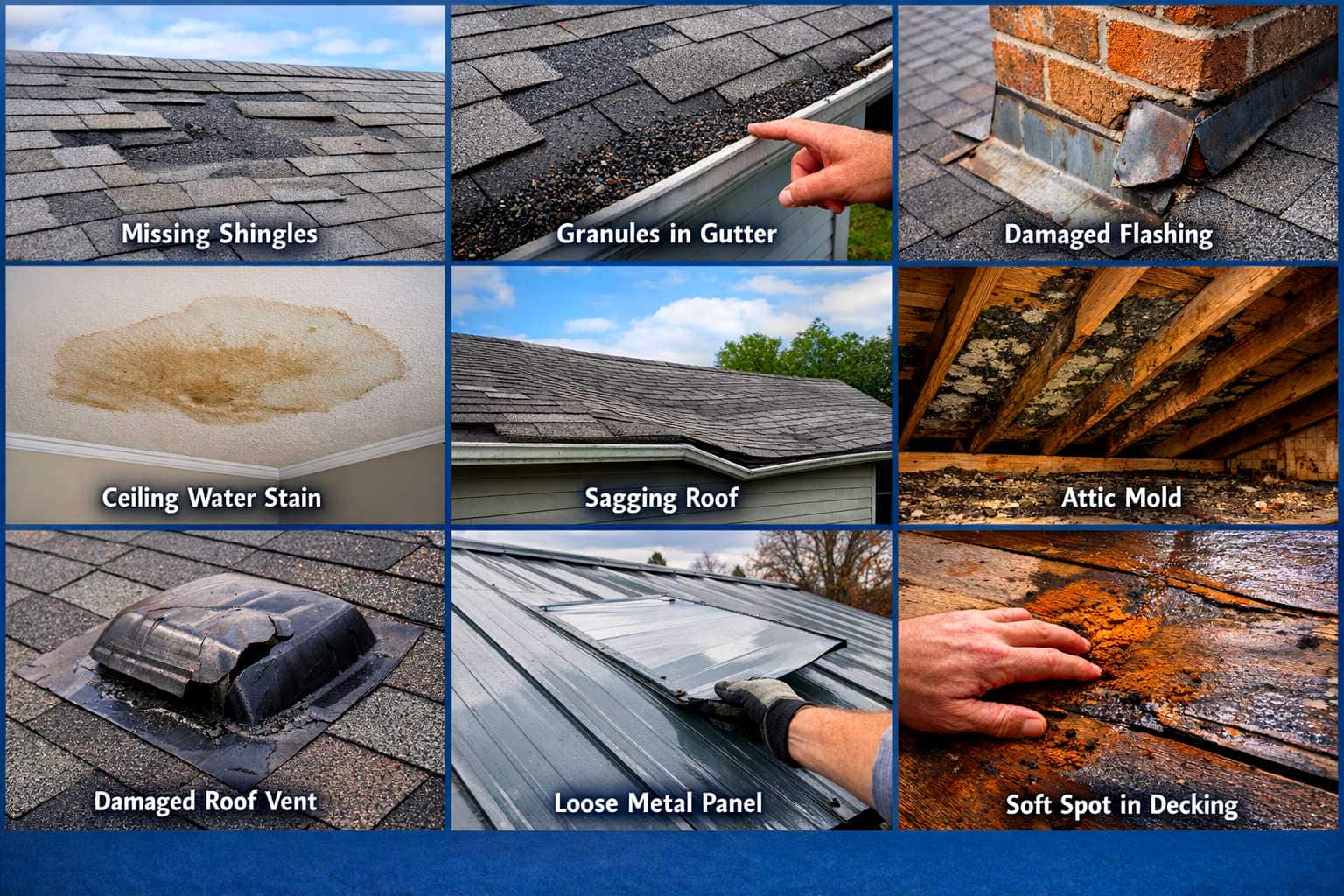
Quick Roof Damage Inspection Checklist for Homeowners
Homeowners can perform simple visual checks from the ground to identify potential roofing issues.
- ✔ Missing shingles after storms
- ✔ Granules collecting in gutters
- ✔ Damaged roof flashing
- ✔ Ceiling water stains
- ✔ Sagging roof areas
- ✔ Mold smell in attic
- ✔ Damaged roof vents
- ✔ Loose metal panels
- ✔ Ice dam buildup in winter
- ✔ Soft spots in decking
If you notice any of these issues, a professional evaluation is the safest next step.
FAQs
- How long can roof damage go unnoticed?
Roof damage can remain hidden for months or even years, depending on where the damage occurs. Small cracks in shingles or flashing can let moisture in. This happens step by step. It may not cause leaks right away. Moisture moves through the decking and insulation. This can cause visible signs inside the home.
- What happens if you ignore roof damage?
Ignoring roof damage allows moisture intrusion and weather exposure to worsen the problem. A small problem can grow into big issues. It can cause structural damage, water leaks inside, and costly roof repairs.
- Can small roof leaks cause serious problems?
Yes. Even small leaks can lead to mold growth, insulation damage, and wood rot when left untreated. Over time, these issues can compromise the structural integrity of the roofing system.
- Will insurance cover old roof damage?
Insurance coverage often depends on the speed of reporting damage after a storm. The insurer may deny delayed claims if it believes the damage resulted from neglect rather than a covered event.
- How often should someone inspect a roof after storms?
Roof inspections should occur after major storms involving hail, strong winds, or heavy rain. Professional inspections can identify hidden roof damage that is difficult to detect from the ground.
- What are the most common signs of storm damage?
Common signs are:
- Missing shingles
- Cracked shingles
- Flashing damage
- Granule loss
- Debris buildup on the roof
- Can damaged shingles lead to structural roof damage?
Yes. Damaged shingles expose the roof decking to water infiltration. Over time, repeated moisture exposure can weaken the structural components of the roof.
- When should you call a roofing contractor?
Homeowners should reach out to a roofing contractor after severe storms. They should also do this if leaks appear or if they see any roof damage.
- Does damaged flashing cause roof leaks?
Yes. Flashing protects vulnerable areas around vents, chimneys, and roof valleys. When flashing becomes damaged or loose, leaks often develop at a rapid pace.
- How expensive is ignoring roof damage?
Neglecting roof damage can lead to higher costs and greater complexity in repairs. A small problem, like a cracked shingle or loose flashing, can grow into bigger issues. If not fixed, it may lead to structural damage, water leaks, and a failing roof.
Fixing roof damage early is usually much easier than waiting for big repairs or a full roof replacement.
- Can roof ventilation problems cause damage?
Yes. Poor ventilation traps heat and moisture in attics. This speeds up the damage to roofing materials and structural components.
- What should homeowners do after a storm?
After a storm, homeowners should get a professional inspection. This helps find hidden roof damage before it gets worse.
Small Roof Problems Today Become Major Repairs Tomorrow
Roof damage rarely stays small for long. Minor issues like damaged shingles or flashing problems may seem small. But, they can turn into bigger structural problems over time. Knowing the timeline of roof damage helps homeowners spot warning signs early. This way, they can act before repairs get expensive.
Timely inspections and repairs can fix many roofing issues. This helps protect the home’s integrity. Tascosa Roofing LLC helps homeowners spot roof issues early. This keeps roofs safe from long-term damage.
Schedule Your Professional Roof Inspection Today
If you suspect roof damage after a storm or notice warning signs around your home, the best step is to get a professional inspection. Small roofing problems can grow into expensive repairs when left untreated.
Tascosa Roofing LLC’s skilled team offers detailed inspections and honest advice. They help homeowners safeguard their roofs and save money.
Call 806-454-9277 today to schedule your inspection. You can also send an email or fill out our web form to request an appointment. Acting early provides peace of mind and ensures your home remains protected for years to come.